Malaysia Supply Update: Commonly Replaced JLG Spare Parts and Typical Lead-Time Factors
When a JLG machine goes down, the real question is usually not whether it can be fixed, but how fast the correct part can be identified, supplied, and installed. For contractors, rental fleets, factory maintenance teams, and independent workshops, delays quickly turn into lost utilisation and missed schedules.
This Malaysia supply update is for teams sourcing Jlg Parts Malaysia. The goal is practical: highlight what fails most often, explain what typically drives lead time, and help you avoid ordering mistakes that cause avoidable downtime. It’s not a price list or a breaking-news bulletin—just a field-oriented guide to common replacements on JLG boom lifts and scissor lifts, plus simple ways to keep your parts pipeline predictable.
1) What “commonly replaced” looks like in real JLG fleets
Replacement patterns vary by model and duty cycle. Outdoor boom lifts see more stress on drive/steer and exposure-related wear; indoor electric scissor lifts often experience more control, charging, and battery-related issues. Across mixed fleets, most replacements fall into these buckets:
- Wear-and-tear items: tires, switches, harness connectors, joystick boots, contactors
- Electrical controls and safety circuits: joysticks, sensors, PCB boards/modules, limit switches, e-stops, control box items
- Hydraulic and motion components: pumps, motors, valve cartridges/coils, seals, hoses/fittings, filtration items (where applicable)
- Charging and power (especially electric units): battery chargers, plugs/cables, battery connectors and protection components
A useful rule for stocking is to prioritise parts that (1) fail frequently and (2) are slow to source or easy to misidentify.
2) High-turnover JLG electrical and control parts (and why they delay machines)
Electrical/control faults often create the longest “diagnosis-to-running” time because one small signal (interlock, sensor, controller input) can lock out major functions. Commonly replaced items include:
Joystick controllers and handle components
Joysticks see constant mechanical input and live in dust, moisture, and vibration. Typical symptoms include inconsistent response, intermittent lift/drive functions, dead zones, or physical damage to the handle/boot.
Lead-time note: joystick availability and confirmation depend on the exact variant. Similar-looking units may differ by connector type, output signal, mounting, or integrated switches. Ordering by appearance is a common cause of returns and extended downtime.
Switches, e-stops, and control box components
Ground and platform control box components are frequently replaced due to water ingress, impact, and worn contacts. E-stops can fail mechanically or electrically after heavy use.
Lead-time note: delays often happen when the machine needs a harness-ready/proprietary assembly rather than a generic switch with “similar specs.”
Sensors, limit switches, and safety interlocks
Sensors and switches confirm safe operating conditions (tilt, load, position, gate/entry status, outriggers where applicable). Failures commonly come from environment exposure, damaged cables, misalignment, or internal wear.
Lead-time note: these parts typically need confirmation by part number or machine model/serial. An “almost matching” sensor can trigger new fault codes and more troubleshooting time.
PCB boards, modules, and harness items
Control boards/modules may be replaced after faults are confirmed, and can be the fastest way to restore function once diagnosis is clear. Harnesses, connectors, and cables are also common replacements after abrasion, corrosion, or pinch damage.
Lead-time note: availability can vary significantly, and revisions may not be interchangeable. Compatibility checking (including revision/application context) is as important as physical stock.
3) Hydraulic pumps, motors, and valve items: the downtime multipliers
Hydraulic components are central to lift and drive on many machines. When they fail, the unit may be completely inoperable, and symptoms can overlap (pump vs motor vs valve vs coil vs contamination), extending diagnosis.
Hydraulic pumps and drive/lift motors
Common warning signs include unusual noise, weak functions under load, overheating, slow/uneven lift, or repeated hydraulic-related alarms (model dependent).
Lead-time note: pump/motor lead time depends on exact specification (displacement, mounting, shaft type, porting) and sometimes serial range/configuration. Two similar machines can use different assemblies due to revisions.
Coil cartridges, solenoids, and valve blocks
Small components can stop a machine just as effectively as a major pump. Symptoms often show up as a single function failing (lift up but not down, steer one direction only, drive but no lift).
Lead-time note: coils/cartridges may be cross-referenced, but incorrect voltage or connector type is a common ordering error. Confirm configuration before ordering.
Seals, hoses, fittings, and contamination-related items
Hoses/fittings fail from harsh conditions and rubbing; seals/O-rings contribute to leaks, drift, and poor performance. While some items can be sourced or fabricated locally, the correct length, end type, and pressure rating are critical.
Lead-time note: hose builds are fast when specs are clear. Delays usually come from missing/too-damaged samples or unclear routing. Photos and marking fittings before removal reduce rework.
4) Tires and wear parts: predictable demand, but easy to mis-specify
Tires are among the most frequently replaced items in access equipment, and wear rate is strongly tied to environment (indoor slab, outdoor rough ground, mixed use). For teams sourcing multiple brands, demand also overlaps with broader searches like Boom Lift Parts Malaysia and tire-related needs. Even if your focus is JLG, treating tires as a standard procurement workflow (not an emergency) improves uptime.
What typically drives tire replacement
- Chunking/cuts from rebar, debris, sharp aggregate, rough terrain
- Flat-spotting from long periods parked under load
- Sidewall damage from kerbs, tight aisles, or transport/loading
- Foam-fill issues or degraded fill integrity (where applicable)
Lead-time note for tires
Lead time is shortest when you can specify size, tread type, and configuration (solid/foam-filled/other). If a wheel assembly is involved, hub pattern details matter. Vague requests like “need scissor lift tire” typically trigger clarification loops and delays.
If you need deeper guidance before the next urgent replacement, this resource can help: Solid Vs Foam Fill Tires Whats Best For Boom And Scissor Lifts In Malaysia.
5) Battery chargers, batteries, and power components on electric JLG machines
Electric scissor lifts are common for indoor work, logistics, and facility maintenance. Power system issues can quietly reduce daily availability: the machine may be mechanically fine but unreliable due to charging or battery-related faults.
Battery chargers and charging cables
Chargers can fail from heat, vibration, moisture, or unstable power. Plugs and cables also take physical abuse and can create intermittent charging.
Lead-time note: chargers must match voltage and charging profile, and compatibility can vary by configuration. A “close enough” charger can cause poor charging or shorten battery life. Provide charger model details and machine information where possible.
Batteries and battery-related connectors
Battery condition affects drive speed, lift performance, and shift reliability. Connectors, terminals, and cables can also create intermittent faults that mimic larger electrical problems (for example, high-resistance connections that heat under load).
6) Typical lead-time factors in Malaysia (what actually causes delays)
Lead time is the sum of identification, confirmation, stock availability, transport, and rework when the wrong item arrives. The most manageable causes are process-related:
Factor A: Incomplete machine identification (model + serial number)
Many JLG parts vary by serial range, configuration, or revision. When model/serial is missing, suppliers must spend time confirming details or risk shipping the wrong variant.
Action step: standardise a parts request template: model, serial number, clear photos of the old part (including label/connector), and a short symptom description.
Factor B: Part-number ambiguity and visual similarity
Many components look alike but differ electrically/mechanically (joysticks, sensors with different outputs, coils with different voltage, harnesses with similar connectors but different pin assignments).
Action step: photograph both sides, connectors, labels, and installed context. If there’s no label, context photos help the supplier identify the correct item.
Factor C: Genuine vs aftermarket selection
Fleets often mix genuine and quality aftermarket parts. The right choice depends on criticality, expected life, and downtime risk tolerance. Availability can differ, affecting lead time based on what you approve.
Action step: pre-define which categories must be genuine (often certain electronics) and where aftermarket is acceptable (often selected wear items), so approvals don’t become the bottleneck.
Factor D: Assembly vs component-level ordering
Sometimes an assembly is the fastest path to uptime; other times a component-level replacement is enough. Picking the wrong approach can extend downtime.
Action step: decide early whether you are optimising for minimum downtime (assembly) or minimum cost (component) and communicate that priority.
Factor E: Troubleshooting uncertainty and “just in case” orders
Ordering multiple “maybe” parts can create returns, wasted time, and confusion—especially when the machine is down at a remote site.
Action step: use a structured fault-finding sequence: confirm power supply, connectors, and basic inputs before replacing higher-cost modules.
Factor F: Logistics timing and delivery window constraints
Even when parts are available, delivery windows and site constraints (jobsite access, receiving hours, transport scheduling) can add days.
Action step: include delivery requirements in the request (site vs workshop, receiving hours, urgency cut-offs) so dispatch can be planned correctly.
7) Stocking strategy: what to keep on the shelf vs order on demand
A practical stocking strategy balances (1) failure frequency, (2) replacement/receiving lead time, and (3) how many units share the same part.
Good candidates for ready stock (typical examples)
- Wear items: common tires and selected wear components matched to your operating environments
- High-failure controls: certain switches, e-stops, and joystick-related items (only where your fleet uses the same variant)
- Electrical basics: relays/contactors/connectors that your workshop regularly replaces
- Hydraulic “small but critical” parts: common coils/cartridges (only when consistent across your machines)
Better ordered on demand (unless you run a large uniform fleet)
- Model-specific PCB boards/modules with revision sensitivity
- Major hydraulic pumps/motors that vary by model/configuration
- Special harnesses and assemblies tied to serial-number specifics
As a general guide: if you operate many identical units, a small shelf of known-compatible controls/chargers can prevent long downtime. If your fleet is highly mixed, you may stock universal wear items and focus on a fast, consistent identification process for specialised electronics.
A simple “A/B/C” parts classification you can implement
| Class | Definition | Stock approach |
|---|---|---|
| A | Stops the machine and is commonly needed | Keep 1–2 on shelf where consistent across fleet |
| B | Stops the machine but less frequent or model-specific | Order quickly with strong identification process |
| C | Non-critical or cosmetic/comfort | Bundle orders or plan with scheduled maintenance |
8) How to place a faster, cleaner parts request (reduce back-and-forth)
Many “lead time” delays come from clarification loops. A complete first request helps suppliers confirm fitment and ship correctly the first time.
Include these details every time
- Machine model and serial number
- Machine type: boom lift vs scissor lift (electric vs engine-powered matters)
- Part photos: label, connectors, mounting points, installed location
- Fault description: what works/doesn’t, fault codes if available (report what you observe)
- Urgency and delivery location: workshop pickup vs jobsite delivery
When the machine is remote: a practical field checklist
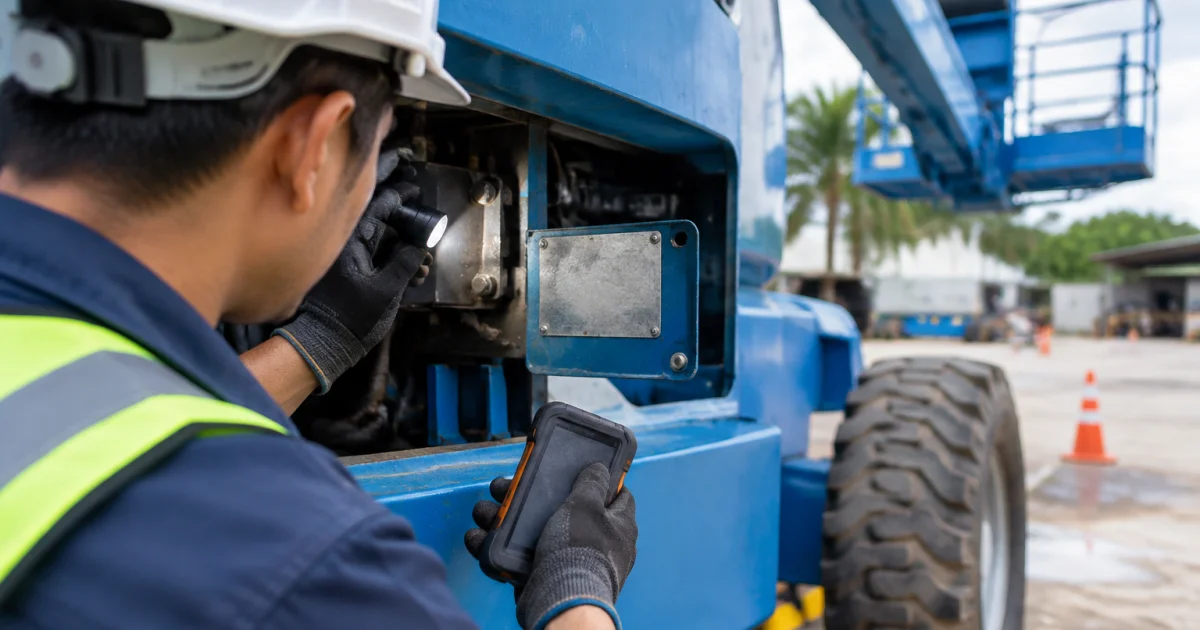
- Photograph the ID plate (model/serial) before you start
- Take a wide shot of the control box area, then close-ups of connectors
- If replacing a hydraulic component, photograph ports and any stamped markings
- Label connectors with tape before removal to avoid reassembly mistakes
For maintenance habits that reduce surprise failures, this guide may help: Top 5 Maintenance Tips For Boom Lifts And Scissor Lifts In Malaysia.
Useful product references for faster identification
When comparing or confirming items, clear part numbers and application notes speed up identification (especially for electronics and controls). These examples show the level of detail that helps:
- Joystick lift/swing option for JLG boom lifts
- Joystick option for JLG ES scissor lifts
- PCB for a JLG ES scissor lift ground control box
Conclusion: reduce downtime by treating parts like a system, not a scramble
For JLG fleets in Malaysia, the most disruptive breakdowns are often not the hardest repairs—they’re the ones where the part is uncertain, the variant is wrong, or approvals and identification take longer than shipping. Improving uptime is as much about process as it is about courier speed.
To make lead times more predictable: (1) track which replacement categories hit your fleet most, (2) stock a small set of high-impact items that match your common models, and (3) standardise the information you provide with every order. Apply the same workflow across broader sourcing categories such as Boom Lift Parts Malaysia and Scissor Lifts Parts Malaysia, and parts ordering becomes routine rather than an emergency.
Frequently Asked Questions
What details should I provide to identify the correct JLG spare part quickly?
Provide the machine model and serial number, photos of the old part (labels, connectors, mounting), and a short description of the fault or symptoms. If possible, include any fault codes shown on the display. This reduces back-and-forth and helps confirm the correct variant the first time.
Which JLG spare parts are most commonly replaced by workshops and fleet teams?
Frequently replaced categories include joystick controllers and related control components, switches and e-stops, sensors/limit switches, PCB boards or control modules (when confirmed faulty), hydraulic coils/cartridges, and wear items such as tires. The exact list depends on whether your machines are boom lifts or scissor lifts and where they operate (indoor vs outdoor).
Why do joystick and sensor orders sometimes take longer than expected?
Many joysticks and sensors look similar but differ by connector type, voltage/signal output, mounting, or revision. Lead time increases when the supplier must confirm the exact variant, or when an incorrect unit is ordered and needs to be exchanged. Clear photos and the machine serial number usually speed up confirmation.
Do hydraulic pumps for scissor lifts require special confirmation in Malaysia sourcing?
Yes. Scissor lift hydraulic pumps can vary by model, build configuration, and serial range, and they may differ by displacement, porting, mounting, or assembly style. To avoid mismatches, confirm using the machine model/serial and any markings on the existing pump, plus photos of ports and connectors.
Should we stock tires, chargers, or control parts for JLG machines?
If your fleet has repeated models and steady utilisation, stocking a small set of high-impact items can reduce downtime—commonly tires (with correct size/type), certain switches/e-stops, and selected joystick or charging components that match your machines. For model-specific PCBs or major pumps/motors, many teams prefer on-demand ordering with fast identification support unless they operate a large uniform fleet.
Need help matching JLG parts to your model and serial number?
SSL Access Parts supports Malaysia-based fleets and workshops with parts identification assistance, genuine and quality aftermarket options, and fast local fulfilment to help reduce downtime. Share your machine model/serial number and a photo of the part or fault area, and our team can help confirm the correct replacement for your JLG boom lift or scissor lift.
We also supply joysticks and control components, sensors and PCB/electrical parts, hydraulic pumps and motors, battery chargers, and tires and other wear parts—so you can consolidate sourcing instead of juggling multiple vendors.
Disclaimer Statement:
We hope you found this article helpful. Our content is intended for general informational purposes only and does not constitute advice or necessarily reflect the full range of services offered by SSL Access Parts Sdn. Bhd. While we strive to provide accurate and up-to-date information, we recommend consulting with an expert or referring to the manufacturer’s guidelines for specific advice or repairs. Any use of the equipment mentioned should comply with safety standards and regulations. SSL Access Parts Sdn. Bhd. is not liable for any actions based on the information provided and cannot guarantee the absence of errors or omissions.