How to Choose Foam-Fill Tires for Boom & Scissor Lifts in Malaysia (Size, Compound, and Load Rating)
Punctures and tire-related stoppages are some of the fastest ways to lose utilisation on a MEWP fleet. For many rental fleets, contractors, and lift owners, foam-filling is the practical middle ground between standard pneumatic tires (easy to puncture) and solid tires (often harsher ride and different handling). If you’re comparing Foam-Fill Tires Malaysia options for a boom lift or scissor lift, the best choice comes down to three fundamentals: correct size, right rubber compound, and a load rating that matches how the machine is actually used.
This tutorial walks you step-by-step through what to check on the machine, what to confirm with your parts supplier, and what to avoid when you want fewer callouts and longer tire life in Malaysian work conditions (construction sites, factories, warehouses, and outdoor projects).
Step 1: Confirm your lift type, duty cycle, and typical surfaces
Before you look at tire sizes or prices, clarify how the machine works day-to-day. Foam-filled tires behave differently depending on machine weight distribution, steering, and how often the lift is driven while elevated.
- Boom lifts (articulating or telescopic) often experience higher scrub during turns, more travel over mixed surfaces, and more weight shift. If you operate a Boom Lift Malaysia unit on rough ground or across site transitions, tire choice affects ride, traction, and wear rate.
- Scissor lifts are commonly used on slabs, warehouse floors, and smooth surfaces, but they can still suffer punctures from screws, rebar tie wire, and debris. For Scissor Lift Malaysia fleets, non-marking needs and floor protection may matter as much as puncture resistance.
Write down:
- Indoor vs outdoor usage percentage
- Surface type: epoxy floor, concrete slab, asphalt, compacted gravel, mixed site
- Exposure to debris (scrap metal, sharp stones, nails)
- Heat and long travel distances (common in large industrial sites)
This simple profile helps you choose compound and tread priorities later (traction vs wear vs floor protection).
Step 2: Identify the correct tire size (don’t rely on “looks about right”)
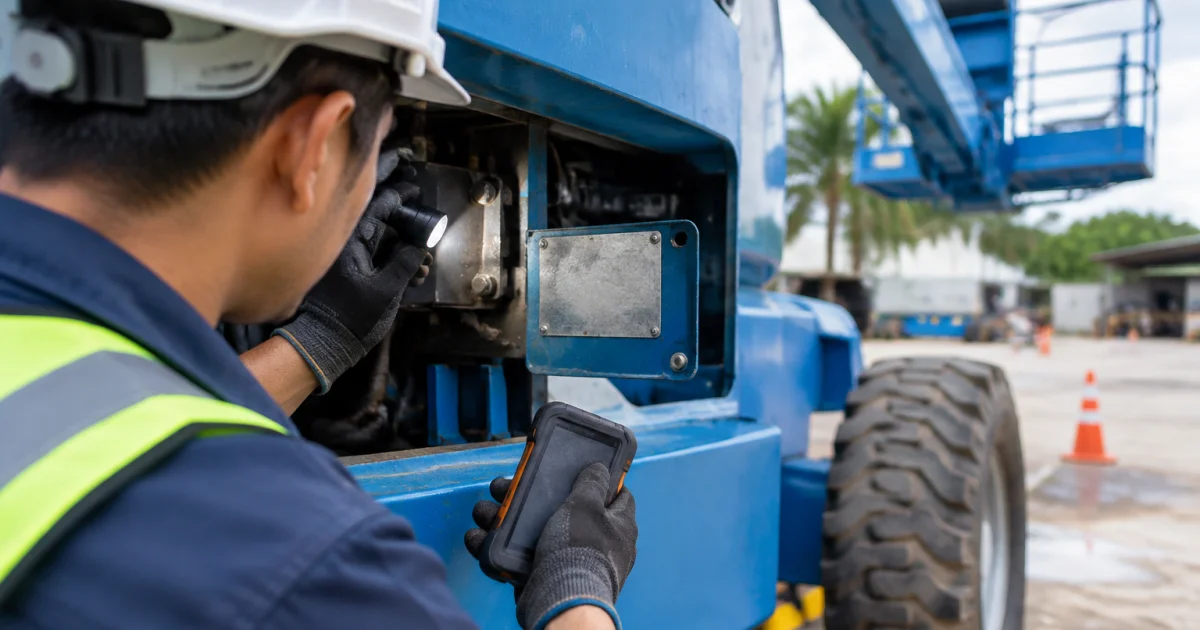
Ordering the wrong size is a common cause of fitment delays—especially when a fleet includes multiple variants of the “same” model. Use at least two sources to confirm the size:
- Sidewall markings on the existing tire (when readable)
- Machine model and serial number (preferred when the current tires may have been changed)
Common MEWP tire formats you’ll see include:
- Industrial inch sizing (example formats such as 10×3, 12×4.5, 15×5)
- Pneumatic-style sizing (example formats such as 23×10-12, 26×12-16.5)
- Rim size references (the wheel/rim must match the tire bead seat correctly)
Measure and confirm these details:
- Overall diameter and section width (tire must clear the chassis, pothole guards, and steering stops)
- Rim width and bead seat type (to avoid poor seating or bead damage)
- Hub and wheel assembly constraints (some lift wheels are specific; don’t assume any 15-inch tire will fit)
If you operate Genie scissor lifts, wheel-and-tire assemblies are often referenced by specific part numbers and sizes. For an example of a size-specific assembly, see Tire Wheel 15×5 Non Marking Genie Scissor Lifts and compare it against your machine details.
Practical tip: When requesting a quote, send a clear photo of the sidewall markings and the machine’s model/serial plate. That reduces back-and-forth and helps your supplier confirm the correct option (genuine vs aftermarket) quickly.
Step 3: Choose foam-fill vs solid vs pneumatic (quick decision guide)
Foam-filling typically means a pneumatic tire is filled with a two-part polyurethane foam. After curing, it supports the load without air pressure—so punctures won’t stop the machine. It’s popular for rental and high-uptime operations where “flat tire” callouts are costly.
Use this quick guide:
- Choose foam-fill when you want puncture resistance but still prefer some cushioning and familiar tire sizing/availability.
- Choose solid tires when puncture risk is extreme and you can accept harsher ride and potentially higher vibration transfer (depends on machine and surface).
- Stay pneumatic when floors are very sensitive, traction requirements are specific, or the machine must remain as light as possible (note: pneumatics are most vulnerable to puncture and pressure-related wear).
For many fleets, foam-fill is the “uptime” choice: fewer flats, less waiting for service, and fewer schedule disruptions—especially when machines move between sites in Klang Valley and beyond.
Step 4: Select the right rubber compound and tread for your environment
“Compound” affects grip, wear life, heat resistance, and whether the tire leaves marks on finished floors. The best compound depends on your surfaces and your customer requirements (for rental fleets, your customers’ floors matter).
Non-marking vs standard (black) rubber
- Non-marking is typically preferred for indoor facilities, clean warehouses, shopping malls, and factories where floor appearance is controlled. It can cost more and may wear differently depending on the rubber blend.
- Standard black rubber often provides strong wear and traction for outdoor and mixed-site use, but it can mark smooth floors.
Tread style: smooth, block, or rough-terrain patterns
- Smoother tread is common on slab-focused scissor lifts. It reduces vibration and can be kinder to floors.
- Block/aggressive tread may improve traction on loose or dusty surfaces but can increase scrub wear on tight turns (common with some boom lift steering dynamics).
Practical check: Ask yourself what causes your replacements today. If your tires are being replaced due to chunking and tearing (not punctures), tread and compound selection matters as much as foam-filling.
Step 5: Verify load rating and understand what changes with foam-fill
Load rating is where many “it fits” tire choices fail in real work. A tire that physically mounts can still be wrong if its load capacity and construction don’t match the machine’s axle loads and duty cycle.
Here’s how to approach it safely and practically:
- Start with the manufacturer’s tire specification for your lift model (or confirm using model/serial with your supplier). Different variants of the same family can have different weights and axle loads.
- Consider attachments and real usage such as heavy operators/tools, frequent driving on slopes, or rough travel. Real-world usage can stress tires more than “typical” assumptions.
- Check the tire construction (ply rating / PR, or other construction markings depending on tire type). This is not just a number—it indicates how the casing is built to handle load and impacts.
- Confirm foam-fill density with your tire/foam provider. Foam-fill is not a single standard; density and fill quality affect stiffness, heat build-up, and longevity.
Important operational note: Foam-filled tires are effectively run-flat. That’s the benefit—but it also means operators may keep driving over debris that would have stopped a pneumatic tire earlier. This can increase casing damage or rim impacts if the site is very rough. Matching casing strength and load rating helps protect against this.
If your fleet also faces frequent breakdowns from non-tire issues, combine tire upgrades with broader uptime planning. A helpful next read is Top 5 Maintenance Tips For Boom Lifts And Scissor Lifts In Malaysia.
Step 6: Use a simple “order checklist” to avoid wrong parts and downtime
When you’re ready to buy, use a checklist to ensure you’re comparing like-for-like quotes and avoiding avoidable returns. This is especially useful for rental companies that want to standardise across multiple sites.
Foam-filled tire buying checklist
- Machine brand/model (e.g., JLG, Genie, Skyjack, Haulotte, Dingli, Manitou)
- Serial number (best for correct spec verification)
- Tire size and rim size (photo of sidewall markings if available)
- Non-marking requirement (yes/no) and primary surface type
- Load rating / construction requirement (confirm rather than assume)
- Application notes: indoor-only, outdoor-only, mixed; frequent turning; rough terrain; long travel distances
Planning tip for fleets: If you’re standardising spares, keep at least one “ready-to-mount” wheel-and-tire assembly for your highest-utilisation models. That can reduce turnaround time compared with waiting for tyre work during peak periods.
And if you’re managing multiple MEWP categories, it helps to keep parts sourcing centralised. You can browse compatible categories for booms at Boom Lifts to align tires, wear parts, and other essentials within one supplier workflow.
Conclusion: Choose foam-fill tires by fitment first, then compound, then capacity
To reduce punctures and downtime, start with the basics: confirm the exact size and wheel fitment for your specific machine, then choose a compound and tread that matches your surfaces (non-marking for sensitive indoor floors, tougher blends for mixed sites), and finally validate load rating and construction so the tire holds up under real operating conditions. When those three decisions are made correctly, foam-filled tires become a predictable, high-uptime choice for both boom lifts and scissor lifts across Malaysia.
If you’d like a second set of eyes on fitment, having the model and serial number ready makes parts identification far faster and helps avoid costly wrong orders.
Frequently Asked Questions
Are foam-filled tires good for boom lifts used outdoors in Malaysia?
Yes—foam-filled tires are commonly chosen for outdoor boom lift work because they reduce puncture downtime on mixed surfaces. The key is to match the correct tire size and casing strength to your boom lift model, and choose a tread/compound that can handle scrub during steering and travel over rough areas.
Do foam-filled tires work for indoor scissor lifts on non-marking floors?
They can, as long as you select a non-marking tire compound and the correct size for the wheel assembly. If your scissor lift operates in warehouses or factories, confirm non-marking requirements with the site owner and verify that the foam-fill option you choose will not compromise floor-protection expectations.
How do I confirm the correct scissor lift tire size if the sidewall markings are worn off?
Use the lift model and serial number to confirm the original tire specification, then cross-check the rim size on the wheel. A parts supplier can typically verify the right fitment from the serial number and help you avoid ordering a similar-looking size that won’t clear the chassis or seat correctly on the rim.
Will foam-filled tires change ride comfort or battery runtime on electric lifts?
Foam-fill generally makes a tire heavier and stiffer than an air-filled pneumatic, so ride comfort can feel firmer and rolling resistance may change. The impact varies by machine and surface. For electric scissor lifts, it’s best to choose the correct compound and avoid overspecifying aggressive tread if the lift mainly runs on smooth slabs.
What information should I send when requesting a quote for Foam-Fill Tires Malaysia?
Send your machine brand/model, serial number, tire size (or a photo of the sidewall), whether you need non-marking, and where the lift operates (indoor/outdoor, smooth slab vs mixed site). This helps the supplier confirm fitment, load suitability, and the best tread/compound for your application.
Get the right foam-filled tire match from SSL Access Parts
Reducing downtime starts with correct fitment. Share your boom lift or scissor lift model and serial number, plus your current tire size and working surface, and SSL Access Parts can help you identify a suitable foam-filled or non-marking option with the right load capacity. You can also consolidate other essentials—tires, wear parts, joysticks, sensors, PCB boards, and hydraulic components—through one MEWP-focused parts partner for faster turnaround.
Disclaimer Statement:
We hope you found this article helpful. Our content is intended for general informational purposes only and does not constitute advice or necessarily reflect the full range of services offered by SSL Access Parts Sdn. Bhd. While we strive to provide accurate and up-to-date information, we recommend consulting with an expert or referring to the manufacturer’s guidelines for specific advice or repairs. Any use of the equipment mentioned should comply with safety standards and regulations. SSL Access Parts Sdn. Bhd. is not liable for any actions based on the information provided and cannot guarantee the absence of errors or omissions.