MEWP Maintenance Trends in Malaysia 2026: What Fleet Managers Are Prioritising to Reduce Downtime
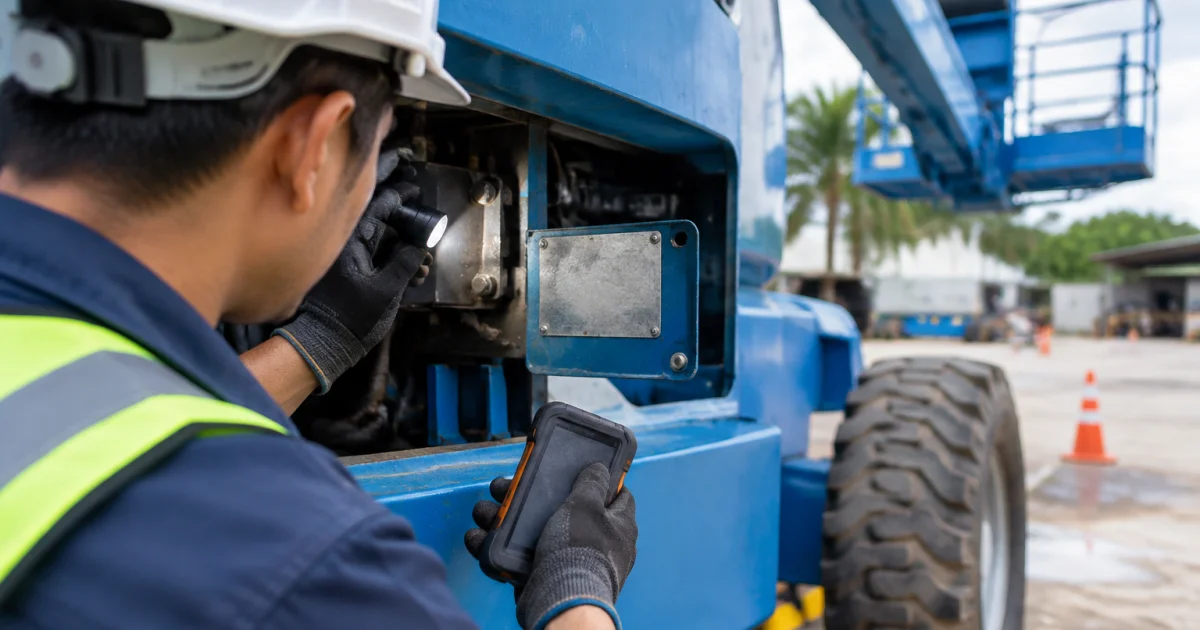
Downtime has always been expensive for mobile elevating work platforms (MEWPs), but in Malaysia the focus for 2026 is shifting from “fix it fast” to “prevent it from stopping.” Fleet managers across construction, rental, industrial plants, warehousing, and facilities teams are tying maintenance closer to operations: parts are staged earlier, wear items are standardised, and troubleshooting is becoming more structured.
If you’re responsible for availability targets, the fastest repair is usually the one you prepared for. That’s why demand for Scissor Lifts Parts Malaysia continues to reflect an “urgent readiness” mindset—buyers want the right component quickly, with fewer wrong orders and less guesswork.
This overview summarises what fleets are prioritising to reduce MEWP downtime and what you can implement this month to match those priorities—without relying on generic checklists.
Trend 1: Uptime starts with parts readiness (not just scheduled servicing)
Preventive maintenance still matters, but many fleets now treat parts availability as the real critical path. Even a well-maintained machine can be taken out by a small failed component if the replacement isn’t on hand.
To create a “downtime buffer,” teams are tightening stocking policies and improving parts identification—especially for electric scissor lifts and high-utilisation boom lifts.
What’s being prioritised
- Fast-moving wear and service items: tyres, switches, contactors, sensors, harness connectors, and common seals.
- Critical-path components: joystick controllers, control boxes, PCB boards, battery chargers, hydraulic pumps and motors.
- Model/serial-based lookup: confirming model and serial number before ordering to avoid “almost correct” parts.
A practical step that reduces delays quickly: require every parts request to include the model + serial number and a photo of the data plate/label. Misidentification is a quiet but common cause of extended downtime and repeat ordering.
Trend 2: Tyres are moving into the “downtime prevention” budget
Tyres are no longer treated as a simple consumable. In 2026, fleets are paying closer attention because tyre issues can trigger compound downtime: movement limitations, safety lockouts, floor damage concerns, and disrupted schedules.
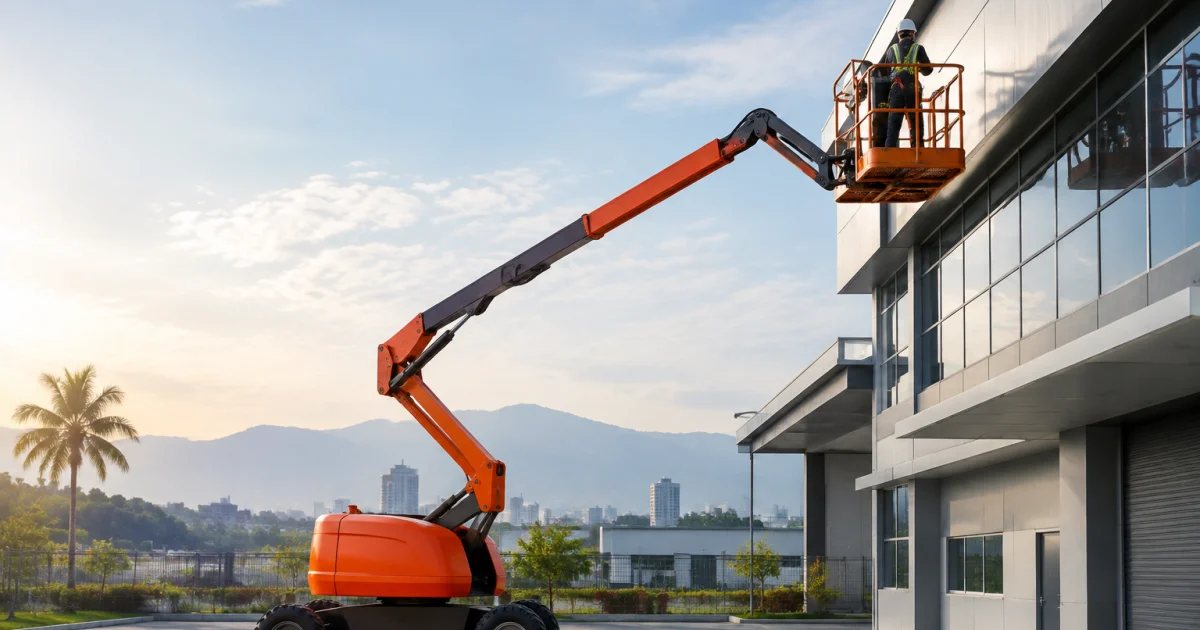
This shows up frequently in Boom Lift Malaysia discussions as well, where travel paths and load conditions vary by job.
Standardising tyre specs by fleet segment: fewer
- Standardising tyre specs by fleet segment: fewer variations mean faster swaps and fewer SKUs to hold.
- Switching strategies for puncture risk: considering solid tyres or Foam-Fill Tires Malaysia where punctures/sidewall failures are frequent.
- Pre-inspection triggers: tyres checked at dispatch and return, not only during servicing.
For rental fleets, tyre condition affects customer confidence and reduces callouts. For owned fleets, tyre reliability improves scheduling predictability.
Useful next reads: if your team is weighing tyre options for reduced puncture downtime, see Solid Vs Foam Fill Tires Whats Best For Boom And Scissor Lifts In Malaysia.
Trend 3: Faster diagnostics through controls and electrical standard checks
Many modern MEWP faults are “quiet”: the machine powers on but won’t drive, lift, steer, or enable functions due to interlocks and sensor logic. As a result, fleets are moving away from repeated part-swapping and toward consistent electrical checks that reduce diagnostic ambiguity.
Joystick and control reliability: response and calibration
- Joystick and control reliability: response and calibration treated as uptime essentials.
- Known-failure electrical components: connectors, switches, limit sensors, relays/contactors, and common wiring damage points.
- PCB/module replacement readiness: identifying correct board versions and compatible replacements without delay.
In Malaysia’s mixed conditions (humidity, dust, outdoor exposure, frequent transport), connectors and switches often become recurring fault points. Fleets are responding with a consistent “first 20 minutes” triage routine: confirm power supply and charging, check E-stops and interlocks (including gate switches), inspect key connectors, then move to deeper module-level diagnosis. The win is less time lost between shifts and fewer unnecessary module replacements.
If you’re aligning internal naming with supplier terminology, browsing a dedicated parts category can help. For example, explore Boom Lifts parts groupings to orient your team around common assemblies and sub-categories.
Trend 4: Hydraulics are being managed as reliability systems (not “repair when leaking”)
Hydraulics remain central to MEWP performance, and fleets are increasingly treating hydraulic stability as a reliability system: fluid health, pump/motor behaviour, and valve consistency are watched to prevent “slow creep” problems—weak lift, inconsistent drive, overheating—that often end in a sudden stoppage.
This is also reflected in sourcing behaviour: technicians aren’t only asking for cylinders and hoses, but also pumps, motors, and cartridge/coil components to restore performance quickly.
Symptom-based early ordering: parts planning begins when
- Symptom-based early ordering: parts planning begins when performance drops, not only after total failure.
- Cleaner identification of pump/motor variants: matching by model/serial and part markings to avoid incompatibility.
- Reducing repeat failures: addressing contamination/filters and related connector conditions where relevant.
Hydraulic downtime costs more than the component: troubleshooting hours, fluid handling, transport/yard space, and potential jobsite penalties. Bringing hydraulics into the uptime plan reduces those hidden costs without over-maintaining machines.
Trend 5: Maintenance is being integrated with dispatch, rental return, and site planning
In 2026, maintenance is less of a standalone activity and more of an operational workflow. Fleets are tying service decisions to dispatch criteria, rental return checks, and site readiness.
For rentals, this often means a tighter “ready-to-hire” gate. For construction owners, it can mean pre-job checks triggered by work type (indoor slab work versus outdoor rough terrain). For factories and warehouses, it can mean scheduling service windows to align with production downtime.
Return-to-yard inspections that generate parts orders immediately
- Return-to-yard inspections that generate parts orders immediately: tyres, controls, and visible electrical/hydraulic issues logged before the next dispatch slot.
- Standard inspection checklists by machine class: scissor lifts, articulating booms, telescopic booms, and vertical lifts each with a tailored checklist.
- Planning for charging and power issues: chargers and batteries treated as “availability infrastructure.”
For electric-heavy fleets, charging-related downtime can be deceptively large: the machine may be mechanically fine but unavailable due to charger faults, incorrect charger type, or declining battery performance. Many fleets are standardising charger types where practical and keeping spares ready for rapid swap testing.
For a starting point to align operators, supervisors, and technicians, see Top 5 Maintenance Tips For Boom Lifts And Scissor Lifts In Malaysia.
How to turn these 2026 trends into a practical downtime-reduction plan
Trends only matter if they translate into repeatable actions. This approach fits most Malaysian fleets, from small owner-operators to rental yards.
1) Build a “top 20 downtime” parts list per machine group
Start with scissor lifts and your most-utilised boom lifts. Focus on parts that stop the machine (controls, sensors, chargers, contactors, key hydraulic items) plus high-churn wear items (tyres, switches). Keep it short enough to maintain and easy to reorder.
2) Require model + serial + symptom notes for every parts request
Suppliers can validate compatibility faster, and your team reduces wrong orders. Internally, you also build a clearer pattern of recurring issues by model and operating environment.
3) Standardise tyres and define when foam-fill or solid makes sense
Decide by operating segment, not only at failure: indoor smooth floors, outdoor yards, construction debris zones, and long travel paths. Pre-approving tyre strategies reduces delays and inconsistent decisions under pressure.
4) Create a “triage first” troubleshooting workflow
For intermittent faults, consistency prevents repeated visits and conflicting shift-to-shift conclusions. Start with charging/power, E-stops and interlocks, visible connector/harness damage, and control input reliability before replacing expensive modules.
5) Align supplier support with uptime targets
Downtime plans fail when procurement is slow or unclear. Choose a parts partner that supports multi-brand fleets (JLG, Genie, Haulotte, Manitou, Skyjack, Dingli and more), offers genuine and aftermarket options, and helps confirm compatibility before dispatch. Fewer wrong orders and faster identification typically translate into faster return-to-service.
Conclusion: In 2026, the fastest repair is the one you prepared for
MEWP maintenance priorities in Malaysia are increasingly defined by readiness: parts planning, tyre reliability strategies, structured diagnostics, and proactive hydraulic and electrical risk management. Most fleets aren’t doing “more” maintenance—they’re doing more targeted maintenance backed by faster parts identification and better workflow integration.
To reduce downtime, start with the components that stop your machines most often, enforce a model/serial-based request process, and ensure rapid access to the right scissor lift and boom lift parts when faults occur. That’s the operational advantage these 2026 trends point toward.
Frequently Asked Questions
What information should I provide to identify the correct MEWP spare part quickly?
Provide the machine brand, model, serial number, and a clear description of the symptom. If possible, include photos of the data plate and the failed part label/connector. This reduces mismatches and speeds up compatibility checks across multi-brand fleets.
Which MEWP parts most commonly cause unexpected downtime in scissor lifts?
Common downtime drivers include joystick/controllers, key switches and interlocks (E-stop and gate switch), sensors and limit switches, contactors/relays, battery chargers, wiring/connectors, and hydraulic pumps or motors. The exact pattern depends on usage intensity and operating conditions.
When should I consider foam-filled tyres for boom lifts or scissor lifts in Malaysia?
Consider foam-filled tyres when punctures and sidewall damage are frequent due to debris, rough yards, or construction-site conditions—especially where callouts are costly or machine availability is critical. Review floor sensitivity and ride requirements before standardising, and align tyre choice with the typical work environment.
How do I reduce diagnostic time for electrical faults on MEWPs?
Use a consistent triage workflow: confirm battery/charger condition and voltage, check E-stops and safety interlocks, inspect key connectors and harness points, and verify joystick/control inputs before replacing modules. Standardising fault reporting (model/serial + symptom + what was checked) also helps different shifts troubleshoot faster.
Do you supply scissor lift hydraulic pumps in Malaysia and can you help confirm compatibility?
Yes—SSL Access Parts supports hydraulic pumps and related hydraulic components for many MEWP models, along with parts identification support. Share the machine model and serial number (and any part markings) so the team can help match the correct pump or motor variant and reduce the risk of ordering the wrong unit.
Get parts-ready support from SSL Access Parts to cut MEWP downtime
If your fleet strategy for 2026 is focused on uptime, the next step is simple: make parts identification and fulfilment faster than your breakdown cycle.
SSL Access Parts supplies scissor lift and boom lift spare parts (genuine and quality aftermarket), including joysticks and control components, sensors and PCB/electrical parts, battery chargers, hydraulic pumps and motors, and tyres/wear parts. Share your machine model and serial number and we’ll help you identify the right component so you can get the machine back to work sooner.
Disclaimer Statement:
We hope you found this article helpful. Our content is intended for general informational purposes only and does not constitute advice or necessarily reflect the full range of services offered by SSL Access Parts Sdn. Bhd. While we strive to provide accurate and up-to-date information, we recommend consulting with an expert or referring to the manufacturer’s guidelines for specific advice or repairs. Any use of the equipment mentioned should comply with safety standards and regulations. SSL Access Parts Sdn. Bhd. is not liable for any actions based on the information provided and cannot guarantee the absence of errors or omissions.