Preventing Downtime with Scissor Lift Spare Parts Stocking in Selangor: Min/Max & Critical Spares
When a scissor lift goes down, the biggest cost is rarely the part—it’s the waiting: idle operators, delayed handovers, rescheduled rentals, and repeat technician visits because a small component isn’t available. For fleet managers and facility maintenance teams, the fastest way to reduce this is to manage spare parts like operations planning: a critical spares list, min/max levels, and clear reorder points.
This guide is for teams operating in Scissor Lift Selangor conditions where turnaround time matters—Klang Valley projects, warehouses with tight maintenance windows, and rental fleets that can’t afford long off-hire periods. You’ll learn how to build a practical stocking model that fits your fleet mix and service workflow without tying up cash in slow-moving items.
Why downtime happens: the “small part” problem in Selangor fleets
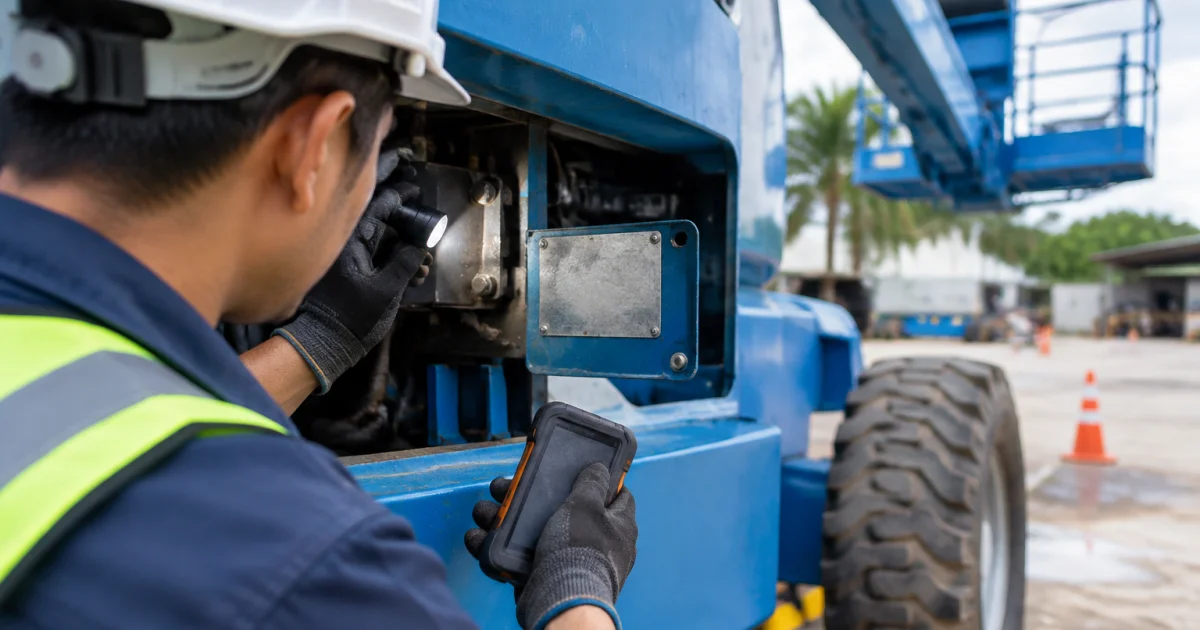
Most scissor-lift downtime isn’t a major failure. It’s typically a no-start, charging issue, interlock that won’t clear, or a hydraulic leak that makes the unit unsafe. These faults often trace back to parts that are:
- Low cost but high impact (switches, sensors, contactors, connectors, fuses).
- Consumable or wear-related (tires, seals, hoses, fittings).
- Known recurring failures on certain models (specific joystick modules, harness sections, PCB boards).
Selangor operations amplify the impact of stockouts because of short-notice rental needs, congested logistics, and site access restrictions (malls, factories, logistics hubs) that limit when maintenance can happen. A “repair first, then order parts” approach often causes repeat downtime. Instead, design spares around first-time fix: the parts most likely to stop operation should be immediately available.
Build a critical spares list (CSL) that matches your fleet and failure modes
A critical spares list is your non-negotiable inventory—items you keep because they fail often, cause total stoppage, or create safety risks when faulty. Build it from your fleet reality, not generic catalogs.
Step 1: group your fleet into “parts families”
Even with multiple brands (Genie, JLG, Dingli, Skyjack, Haulotte, Manitou), you can reduce SKUs by grouping machines into parts families:
- Power system: battery type, voltage (often 24V/48V), charger style, connectors.
- Control system: joystick/controller type, main control board, platform/ground controls.
- Hydraulics: pump/motor style, valve coils, common seal/hose sizes, fittings.
- Mobility: tire type (solid/foam-filled), hubs, brakes, steering components (if applicable).
This approach helps you cover more machines with fewer items, especially when you standardize compatible genuine and quality aftermarket options where appropriate.
Step 2: identify “stop-the-world” parts
Prioritize parts that prevent safe operation or cause a unit to fail pre-delivery inspection (PDI). Typical critical categories for electric scissor lifts include:
- Charging components (chargers, plugs/connectors) that commonly cause “dead machine” issues.
- Platform/ground controls (joystick controllers, enable switches, emergency stop parts, rocker switches).
- Sensors and interlocks (tilt sensor, limit switches, pothole protection switches, outrigger/guard sensors where fitted).
- Electrical essentials (contactors, relays, fuses, key switches, power cables/connectors).
- Hydraulic sealing items (seal kits, hose assemblies, fittings, O-rings) for repeat leak points.
- Pumps/motors where failures or lead times are proven downtime drivers.
- Tires & wear parts when damage regularly causes off-hire.
Validate using your maintenance history. If records are messy, start with technician notes, WhatsApp photos, and invoices—then formalize the list as you go.
Step 3: define “A/B/C criticality” to avoid overstocking
Tiering keeps inventory lean while protecting uptime:
- A (Immediate): hard downtime/safety stop; must be in stock (common sensors, switches, charger, contactor).
- B (Fast follow): can wait 24–72 hours; keep limited or shared stock.
- C (Order as needed): rare/high-cost/model-specific; rely on fast sourcing and clear identification.
Min/Max inventory: set levels that prevent stockouts without tying up cash
Min/max control is simple: when stock hits the minimum, reorder up to the maximum. You can run it in a spreadsheet and still eliminate most avoidable downtime.
What you need to set min/max correctly
For each CSL item, capture:
- Description and fitment notes.
- Part number(s) plus alternates/supersessions.
- Machines covered (models/serial ranges).
- Average monthly usage (estimate first, refine quickly).
- Supplier lead time (best-case vs typical).
- Criticality (A/B/C).
- Storage needs (shelf life, heat/humidity sensitivity, ESD protection for electronics).
A practical min/max approach for rental fleets and facility teams
- Min (reorder point) = expected usage during lead time + buffer for variability.
- Max = min + a sensible replenishment quantity (space/cash/supplier MOQs).
Aim for reliable service continuity, then tune monthly. The first set of numbers won’t be perfect—but it will prevent the common “one missing part” delays.
Don’t forget “hidden demand” from preventive maintenance
Demand rises when you improve PM: proactive hose replacement, early tire changes, charger connector upgrades. Your min/max settings should reflect both breakdowns and PM—especially if you’re standardizing maintenance across branches under Scissor Lifts Parts Malaysia programs.
Reorder points, kitting, and technician workflow (where uptime is won)
Even good inventory levels fail if parts are hard to find, misidentified, or issued without tracking. Pair min/max with a simple, repeatable workflow.
Set a clear reorder trigger and owner
Pick one consistent ownership model:
- Storekeeper-driven: reorder when bin stock hits min during cycle counts.
- Technician-driven with approval: technicians flag lows after issuing.
- Planner-driven: weekly review and PO creation.
Add a weekly 15-minute “A-items review” to keep surprises rare.
Use repair kits (“kitting”) for repeat jobs
Kits reduce missed small parts and repeat trips. Common examples:
- Hydraulic leak kit: common O-rings/seals, thread sealant, fittings, most-used hose sizes.
- Electrical no-start kit: key switches, fuses, common relay/contactor, battery connectors, common sensors.
- Platform control kit: enable switch, emergency stop, common rocker switches, joystick accessories.
Parts identification: standardize what technicians must capture
Wrong parts create returns, delays, and repeat disassembly. Require every request to include:
- Brand, model, and serial number (nameplate).
- Clear photos of the failed part and connectors/mounting.
- Symptoms/fault codes (if available).
- For hoses/tires: measurements (length, fitting type/angle, tire size/type).
What to stock for fastest recovery: practical categories (electrical, hydraulic, tires)
Fleet needs differ, but downtime patterns are consistent. Focus on parts that decide whether a lift returns today or next week.
Electrical and control parts (high frequency, high downtime impact)
- Joystick assemblies/components (based on your failure history).
- Sensors/switches tied to safety interlocks.
- Contactors/relays for lift/drive circuits.
- Connectors/cables that fail at hinges or moving joints.
- PCB boards/modules for models with recurring board-related faults.
Store electronics clean and dry; shelf damage can undermine your entire plan.
Power: batteries and chargers (avoid the “no charge, no rental” scenario)
Charging issues are a frequent root cause of downtime and are often misdiagnosed as battery failure. Keep limited coverage for your most common voltage/amp requirements, standardize connectors where possible, and label chargers clearly by compatibility (especially in mixed-brand fleets). Keeping one or two known-good chargers speeds troubleshooting by quick swap testing.
Hydraulics: hoses, fittings, and the parts that stop lifting
- Common hose assemblies for your most serviced models.
- Seal kits for frequent leak points (cylinders/manifolds).
- Valve coils/cartridges if coil failures are common.
- Pumps/motors where lead times and impact justify stocking.
If your team often searches for scissor lift hydraulic pumps Malaysia options, treat pumps as selective stock: carry coverage for your highest-utilization models and rely on fast identification for rare variants.
Tires and wear items: reduce off-hire from preventable damage
Tire failures can ground an otherwise healthy machine. Stock your most common sizes and set clear replacement triggers (chunking, delamination, severe flat-spot). If you also manage boom lifts, separate tire SKUs clearly to avoid wrong issues during urgent jobs.
Implementation checklist for Selangor teams (30 days to a workable system)
You don’t need a full ERP to get results. A disciplined 30-day rollout can reduce repeat downtime quickly:
- Week 1: Create your critical spares list
Start with the top 20–40 downtime-driving items (A-items first). - Week 2: Assign min/max and storage locations
Label bins, set min/max, and separate A-items for fast access. - Week 3: Set the reorder workflow
Choose one owner, set a weekly review, and log issues (part, machine serial, date, technician). - Week 4: Audit and tune
Check stock accuracy and adjust min/max using real consumption.
Build a simple rule: any part that causes a long delay gets reviewed for addition to the CSL or upgraded from B to A.
Useful next reads and relevant parts categories
- Top 5 Maintenance Tips For Boom Lifts And Scissor Lifts In Malaysia
- Solid Vs Foam Fill Tires: What’s Best For Boom And Scissor Lifts In Malaysia
- Scissor lift parts and components (category)
Conclusion: design your spares system for first-time fix, not just purchasing
Downtime prevention isn’t about stocking “more parts.” It’s about stocking the right parts, reliably, with a simple process technicians can execute under pressure. In Selangor, a critical spares list plus min/max controls is one of the highest-impact operational upgrades you can make.
Start with the items that stop machines, standardize identification using model/serial details, and tune min/max levels based on real usage. Over time, your inventory becomes a tool for predictable uptime—supporting safer operations, higher technician productivity, and fewer surprise delays across your Scissor Lift Malaysia fleet.
Frequently Asked Questions
What are “critical spares” for a scissor lift fleet in Selangor?
Critical spares are the parts you keep on hand because their failure causes immediate downtime, safety lockouts, or repeated call-backs. For most electric scissor lifts this typically includes key switches and interlocks, common sensors, contactors/relays, platform control switches, joystick-related components, charger-related items, and the most common hydraulic seals/hoses for your fleet.
How do I set min/max levels if I don’t have good usage history yet?
Start with a simple baseline: categorize parts as A/B/C criticality, then set A-items with a conservative buffer (enough to cover likely demand during replenishment lead time plus variability). Track every issue for 4–8 weeks, then adjust min/max based on actual consumption. The goal is fast learning and fewer stockouts, not perfect forecasting on day one.
Should rental companies stock hydraulic pumps for scissor lifts?
Only if pump failures are a known downtime driver in your fleet or lead times are long enough to create costly off-hire periods. Many fleets treat pumps as a “selective stock” item: keep coverage for the highest-utilization models, while relying on fast parts identification and sourcing for rare variants. If your technicians frequently troubleshoot lift/drive hydraulic issues, also stock common valve coils and seal kits to restore service quickly.
What information is needed to identify the correct scissor lift spare part?
Provide the brand, model, and serial number from the machine nameplate, plus clear photos of the failed part and its connectors/mounting points. If the issue involves hydraulics or tires, include measurements (hose length, fitting types/angles, tire size). Fault codes and a brief symptom description help confirm the correct part and avoid wrong-order delays.
Do you supply parts for Genie, JLG, Dingli, Skyjack, and other brands in Malaysia?
Yes. SSL Access Parts supports multi-brand MEWP fleets with genuine and quality aftermarket options, including scissor lift spare parts, boom lift spare parts, chargers, joysticks, sensors, PCB/electrical parts, hydraulic pumps/motors, and tires. Share your machine model and serial number and the team can help confirm compatibility before you reorder.
Reduce downtime with a smarter spares plan from SSL Access Parts
If you’re maintaining a mixed fleet in Selangor, stocking the right parts is the fastest way to improve uptime. SSL Access Parts can help you build a practical critical spares list, confirm part numbers using your model and serial number, and supply ready-stock options across electrical controls, chargers, sensors, PCB parts, hydraulic components, and tires—so your technicians can achieve more first-time fixes.
Disclaimer Statement:
We hope you found this article helpful. Our content is intended for general informational purposes only and does not constitute advice or necessarily reflect the full range of services offered by SSL Access Parts Sdn. Bhd. While we strive to provide accurate and up-to-date information, we recommend consulting with an expert or referring to the manufacturer’s guidelines for specific advice or repairs. Any use of the equipment mentioned should comply with safety standards and regulations. SSL Access Parts Sdn. Bhd. is not liable for any actions based on the information provided and cannot guarantee the absence of errors or omissions.