Why Many Malaysian Fleets Mix Genuine and Aftermarket Lift Parts (and When It Backfires)
Most workshop owners and procurement teams don’t debate whether to mix genuine and aftermarket parts—they debate how far they can push the mix before reliability, safety, or troubleshooting time wipes out the savings. In Malaysia, this “hybrid” approach is common in mixed-brand MEWP fleets where one workshop supports JLG, Genie, Skyjack, Haulotte, Dingli, Manitou, and more.
For sites in Johor or rental fleets moving across states, the decision is usually commercial: lead times, local availability, warranty expectations, and what technicians can diagnose quickly. That’s why urgent searches like Jlg Parts Malaysia and Boom Lift Parts Malaysia spike around failures—joysticks, sensors, chargers, tires, and hydraulic components that can ground a machine.
This article explains why fleets mix parts, where it’s typically smart, and where it backfires. I’ll use Scissor Lift Johor as a practical lens because Johor fleets often face high utilization, multiple brands, and tight downtime windows.
Why mixing parts is the default, not the exception
In a perfect world, every part would be genuine, matched to the machine revision, and installed with the latest OEM bulletin. In reality, decisions are constrained by time, cash flow, risk tolerance, and diagnostic capacity.
Time: Downtime cost isn’t just the part—it’s idle labor, rescheduling, transport, and sometimes penalties. If a suitable alternative is available locally while genuine stock has a long lead time, many teams choose what restores operation fastest, especially for non-critical items.
Cash flow: Contractors and rental companies manage many machines. Genuine parts can be the best choice, but budgets are finite. Mixing lets teams spend genuine where it matters most and control costs where it doesn’t.
Risk tolerance: “Soft” failures (gradual performance drop) are easier to accept with quality aftermarket than “hard” failures (fault lockout, sudden stop, unsafe behavior).
Diagnostic capacity: The more mixed your parts are, the more you need disciplined troubleshooting. Workshops with strong test processes can use more alternatives safely; swap-and-see shops are more likely to get burned when a part behaves slightly differently than expected.
Where mixing genuine and aftermarket usually works well
Not all aftermarket is equal. Some manufacturers match tolerances closely; others produce look-alikes that create repeat faults. Mixing works best in categories where variation is easier to manage and failure consequences are lower.
1) Wear parts and consumables
Wear items are where many fleets get the best value—tires, certain bushings, some seals, common switches, and routine replacements. When a worksite eats tires, the practical metric is cost per operating hour, not a fixed sourcing rule.
The caveat: tires still affect behavior. Differences in compound, hardness, or diameter can change traction and braking feel and increase floor-marking risk. One wrong tire choice can become a customer complaint even if the lift runs.
2) Non-calibrated electrical items (with verification)
Some electrical items can be substituted if you verify connector type, voltage, and ratings. Certain relays, lamps, and basic switches are often suitable—if you confirm compatibility rather than relying on appearance.
Battery chargers are another common mix area. Many electric scissor and vertical lifts share voltage requirements across models, and a reliable non-OEM charger can simplify fleet standardization. The key is correct specification and protection features that match the battery type.
3) Hydraulic “plumbing” components—sometimes
Hoses, fittings, and some serviceable hydraulic components are often mixed, especially for urgent leaks. However, components that affect control characteristics or load holding require more caution.
When workshops search for scissor lift hydraulic pumps in Malaysia, it’s usually because the machine is down and a fast fix is needed. Pumps and motors can be replaced with equivalents in some cases, but mismatches in displacement, pressure rating, or efficiency can lead to slow functions, overheating, or recurring faults. “It fits” is not the same as “it performs correctly under duty cycle.”
Where it backfires: the parts that punish shortcuts
Backfires often don’t show up as instant failure. They show up as repeat call-backs, intermittent faults, nuisance error codes, and long diagnostic cycles that quietly erase the savings.
1) Control chain components: joysticks, control boxes, and PCB-related parts
Control components sit at the center of operator safety and machine behavior. If a joystick has a different signal curve, deadband, or switch timing, symptoms can mimic wiring or controller faults, leading teams to replace additional parts chasing the issue.
PCB boards, sensors, and modules are even more sensitive. A sensor might be “in range,” yet the controller may expect a specific response speed, noise level, or calibration profile—causing cut-outs that only appear under heat or load.
This is where brand nuance matters. A fleet supporting Genie and JLG may see similar-looking components with very different connector families and calibration expectations. If purchasing doesn’t enforce model/serial verification, the “it looks the same” assumption becomes expensive.
2) Braking and drive-related components
Brakes, drive motors, and their control pieces are poor places to gamble on unknown quality. Even if marketed as compatible, tolerance and material differences can change stopping behavior, heat characteristics, and wear rate—creating safety and liability exposure.
3) Load-holding and stability-critical hydraulics
Components that directly affect holding a platform position (certain valves and cartridges) deserve stricter sourcing and testing. If a new part creeps under load or behaves inconsistently, technicians may waste hours suspecting cylinders, pumps, or control logic before they suspect the replacement part.
The hidden cost is not the part—it’s the diagnostic time
Price comparisons (genuine vs aftermarket) miss the fleet metric that matters: total cost to restore reliable service. Two common traps are:
- Intermittent faults: A part that is “mostly fine” can trigger multiple call-outs and hours of troubleshooting—costs that don’t appear on the invoice but hit labor, transport, and customer confidence.
- Parts stacking: When the first visit doesn’t fix the issue, teams often replace parts in sequence (sensor, harness, controller). Low-quality or mismatched electronics make this far more likely.
Disciplined workshops typically apply a simple rule: if a component is difficult to diagnose, labor-heavy to access, or central to the control chain, lean genuine—or use a vetted aftermarket source validated repeatedly.
A practical decision framework procurement and workshops can use
Mixed-brand fleets need a policy technicians trust and procurement can defend. This framework helps keep decisions consistent.
Step 1: Classify the part by risk and troubleshooting impact
- Category A (high risk / high diagnostic impact): joysticks, controllers/PCB, key sensors, braking components, load-holding valves.
- Category B (medium): pumps and motors (case-by-case), contactors, certain harness parts, chargers (spec-dependent).
- Category C (low): many wear parts like tires and routine consumables (with correct spec and fitment).
Mix freely in Category C, cautiously in Category B, and only with strong justification in Category A.
Step 2: Define what “aftermarket” means for your fleet
Document acceptable sources: approved aftermarket brands, remanufactured options, and unknown suppliers. Many failures happen because organizations treat all non-genuine items as one bucket.
Step 3: Lock your identification process (model + serial first)
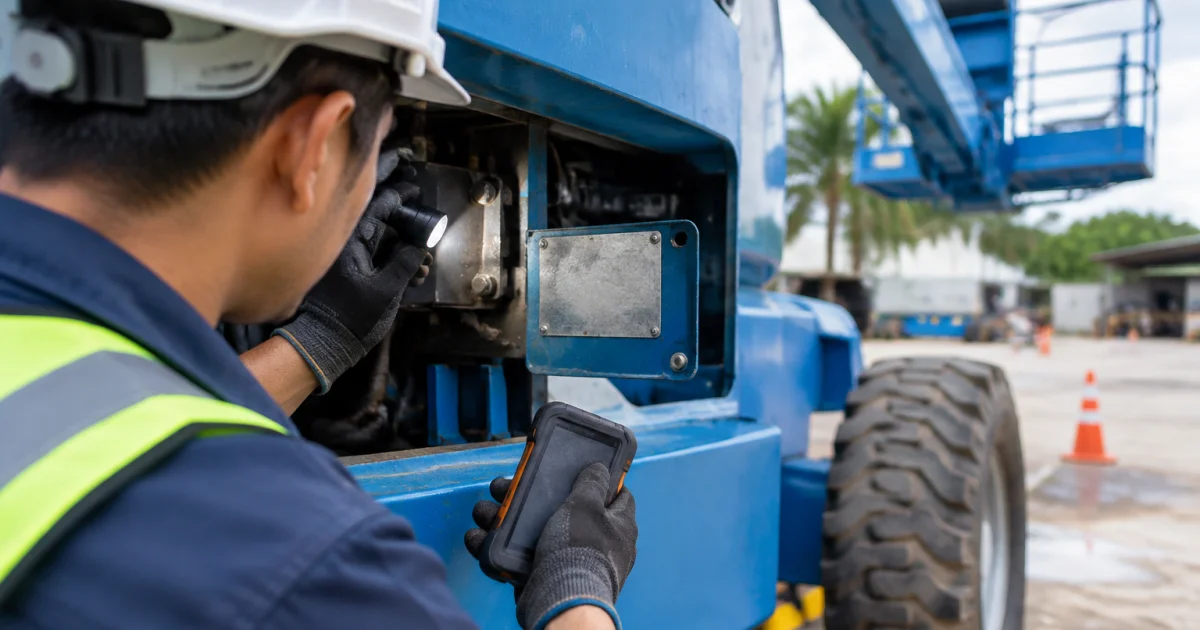
Wrong parts are often ordered by nickname (“the 12m Genie”) instead of full identification. Mixed fleets also include multiple revisions of the same model. A practical rule: no part is ordered—genuine or aftermarket—without model and serial verification.
Step 4: Standardize what you can across sites
For fleets operating across regions, standardization reduces errors. Even if brands vary, you can standardize process: inspection checklists, tire selection rules by application (indoor/outdoor, slab/rough terrain), and an approved shortlist for frequently replaced items.
Step 5: Track failures like a workshop, not like a purchasing department
Purchasing tracks spend; workshops track repeat failures and time-to-fix. Combine both views. If a cheaper alternative drives call-backs, update the policy quickly—no blame, just feedback.
Where this lands for Johor fleets and mixed-brand operations
For Scissor Lift Johor operations—construction sites, factories, warehouses, and rental yards—the best approach is rarely “all genuine” or “all aftermarket.” It’s predictable decisions that reduce downtime and repeat faults. The strongest fleets tend to do three things:
- Use genuine (or thoroughly vetted equivalents) for control-chain and safety-critical components.
- Use quality aftermarket for wear items and routine replacements where spec checking is straightforward.
- Invest in parts identification discipline and technician-friendly support so the first fix is the final fix.
Useful next reads for fleet maintenance planning
- Top 5 Maintenance Tips For Boom Lifts And Scissor Lifts In Malaysia
- Solid Vs Foam Fill Tires: What’s Best For Boom And Scissor Lifts In Malaysia
- Boom Lift Johor
Conclusion: Mix parts, but don’t mix standards
Mixing genuine and aftermarket lift parts is normal in Malaysia because uptime pressure is real and mixed fleets are complex. It works when you apply a clear standard: prioritize safety-critical and hard-to-diagnose components, verify fitment by model and serial, and use vetted suppliers who can support identification and warranty questions.
It backfires when all aftermarket is treated as equal, sensitive control/electronic parts are installed without validation, or urgent orders bypass identification checks. Tighten those habits and you can keep the cost benefits of mixing without paying the hidden tax of repeat breakdowns and long troubleshooting cycles.
Frequently Asked Questions
Is it okay to mix genuine and aftermarket parts on a scissor lift?
Yes—many fleets do it successfully. The key is to be selective: wear items (like certain tires and consumables) are often suitable for quality aftermarket options, while control-chain and safety-critical components (joysticks, sensors, PCB-related parts, braking items) should be genuine or from a thoroughly vetted equivalent source.
Which lift parts are most likely to backfire if sourced as low-quality aftermarket?
In practice, the most common “backfire” categories are joysticks and control boxes, sensors and modules, PCB/controller-related parts, braking components, and load-holding hydraulic valves. These parts can create intermittent faults, nuisance error codes, or unsafe behavior that takes longer to diagnose than the original savings.
How do I reduce wrong-part orders for mixed-brand fleets (JLG, Genie, Skyjack, etc.)?
Enforce a model-and-serial-first workflow. Don’t order by a machine nickname or general model family. Provide the full model and serial number, confirm connector type and revision when relevant, and keep a short internal record of what has been fitted previously (especially for electronics and hydraulics).
When choosing Jlg Parts Malaysia suppliers, what should procurement ask for?
Ask whether they can support parts identification using your machine model and serial number, whether they offer genuine and quality aftermarket options, and what warranty support applies. Also confirm lead time expectations and whether they can advise on compatibility risks for control, sensor, and hydraulic components.
Can aftermarket hydraulic pumps cause performance problems on scissor lifts?
They can. Even when a pump physically fits, differences in displacement, pressure rating, efficiency, or internal tolerances can lead to slow functions, overheating, unusual noise, or recurring fault symptoms. If you’re replacing a pump, verify specifications carefully and consider the total downtime risk if troubleshooting becomes longer than expected.
Need help choosing genuine vs aftermarket lift parts?
SSL Access Parts helps Malaysian fleets balance cost and reliability by supplying both genuine and quality aftermarket options for scissor lifts and boom lifts. Share your machine model and serial number, and our team can assist with parts identification for joysticks, sensors, PCB and electrical components, battery chargers, hydraulic pumps and motors, and tires—so you can reduce downtime and avoid repeat breakdowns.
Disclaimer Statement:
We hope you found this article helpful. Our content is intended for general informational purposes only and does not constitute advice or necessarily reflect the full range of services offered by SSL Access Parts Sdn. Bhd. While we strive to provide accurate and up-to-date information, we recommend consulting with an expert or referring to the manufacturer’s guidelines for specific advice or repairs. Any use of the equipment mentioned should comply with safety standards and regulations. SSL Access Parts Sdn. Bhd. is not liable for any actions based on the information provided and cannot guarantee the absence of errors or omissions.